The Future of High-Temp PEEK Printing
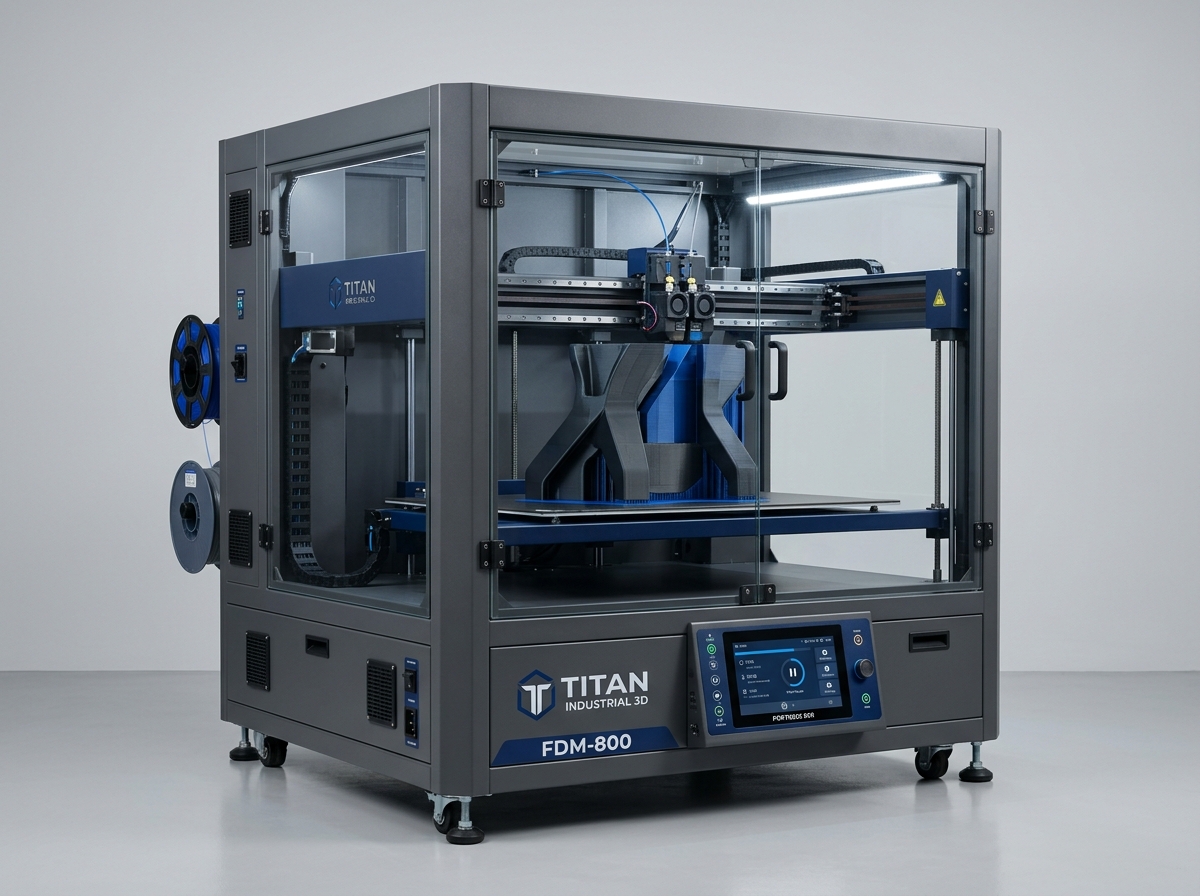
PEEK (Polyetheretherketone) is highly sought after in the aerospace, automotive, and medical industries for its exceptional mechanical properties, chemical resistance, and high-temperature tolerance. However, 3D printing PEEK effectively remains one of the greatest challenges in FDM technology.
The Thermal Management Challenge
Unlike standard PLA or ABS, PEEK requires extrusion temperatures exceeding 400°C. But achieving a hot enough nozzle is only half the battle. If the ambient environment within the build chamber isn't precisely controlled, PEEK parts will suffer from extreme warping, poor layer adhesion, and crystallization failures.
Active Chamber Heating
To combat thermal shock, modern industrial printers utilize Active Chamber Heating. By maintaining an internal ambient temperature of 120°C to 150°C, the extruded PEEK cools slowly and evenly. This annealing process occurs during the print, resulting in parts with near-isotropic strength and flawless dimensional accuracy.
What's Next for Ultra-Polymers?
As machine engineering advances, we are seeing the integration of smarter thermal cameras and AI-driven slice profiles that adjust extrusion parameters in real-time. This guarantees perfect crystallization for every layer. The future of additive manufacturing is rapidly shifting from prototyping to replacing heavy metal parts with lightweight, high-strength PEEK components.